
7 Telegram Reseller Panel Types for Search Ranking in 2026

Last updated: November 2026
The best Telegram reseller panel for search ranking is a direct API provider or a specialized white-label platform, not a generic SMM panel. With over 1 billion monthly active users, Telegram has become a major discovery platform. However, ranking in its global search requires influencing specific signals that most cheap panels do not offer or control.
For resellers, this distinction is critical. Offering a true search ranking service means moving beyond basic social proof and providing services that influence Telegram's algorithm directly. This guide compares seven distinct types of tools resellers use to offer these services, from turnkey platforms to raw data APIs, helping you choose the right foundation for your business.
How We Evaluated Reseller Panel Solutions
Choosing a backend for a reseller service is not about finding the cheapest price per thousand members. Instead, it's about the technical features, transparency, and control needed to offer a reliable search optimization product. We assessed these solutions based on criteria that matter to a reseller's business:
- API Access & Documentation: Can you integrate the service into your own site or bot?
- White-Label Capability: Can you brand the service as your own?
- Service Specificity: Does the service offer signals relevant to search (e.g., keyword joins, profile interactions) or just generic metrics?
- Data Transparency: Do you know the source of the accounts and the method of delivery?
- Scalability & Pricing: Does the model support wholesale volumes and reseller margins?
Reseller Panel Options for Telegram Search: A Comparison
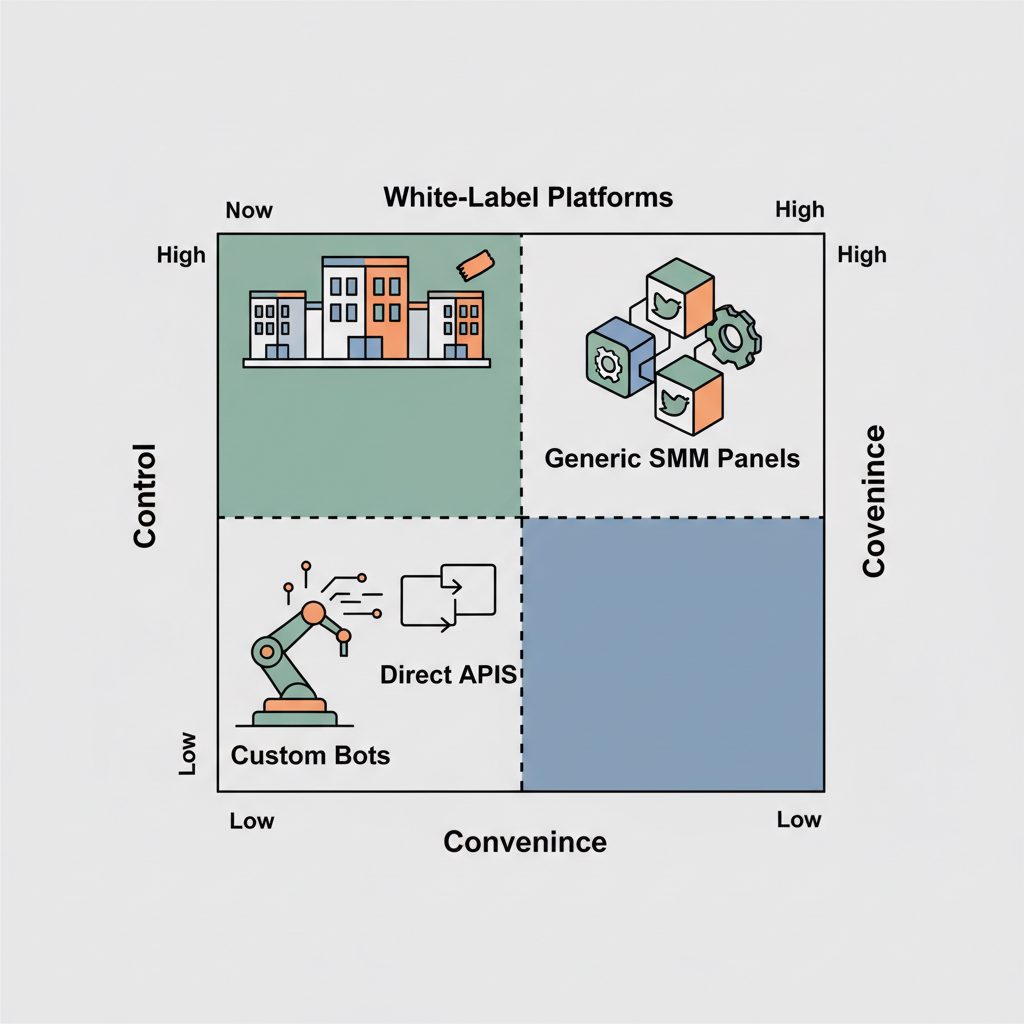
| Solution Type | Best For | Pricing Model | Key Limitation |
|---|---|---|---|
| 1. Generic SMM Panels | Basic social proof (views, members) | Pay-per-1000 | No control over search signals |
| 2. Telegram-Specific Panels | Broader range of Telegram services | Pay-per-1000 | Methods are often a black box |
| 3. White-Label Platforms | Quick setup of a branded panel | Subscription + wholesale rates | Dependent on the platform's service quality |
| 4. Direct API Providers | Panel owners & developers | Per-API call or subscription | Requires technical integration skills |
| 5. Custom Automation Bots | Full control and unique methods | Development & server costs | High maintenance and platform risk |
| 6. Discovery & Analytics Tools | Market research and strategy | Monthly subscription | Provides data, not fulfillment |
| 7. Niche Signal Services | Targeting one specific ranking factor | Per-action or package | Incomplete solution on its own |
What are the 7 types of reseller panels for Telegram search?
Not all panels are created equal, especially when the goal is influencing search results. Here is a breakdown of the seven primary models a reseller can use to build their service offering.
1. Generic SMM Panels
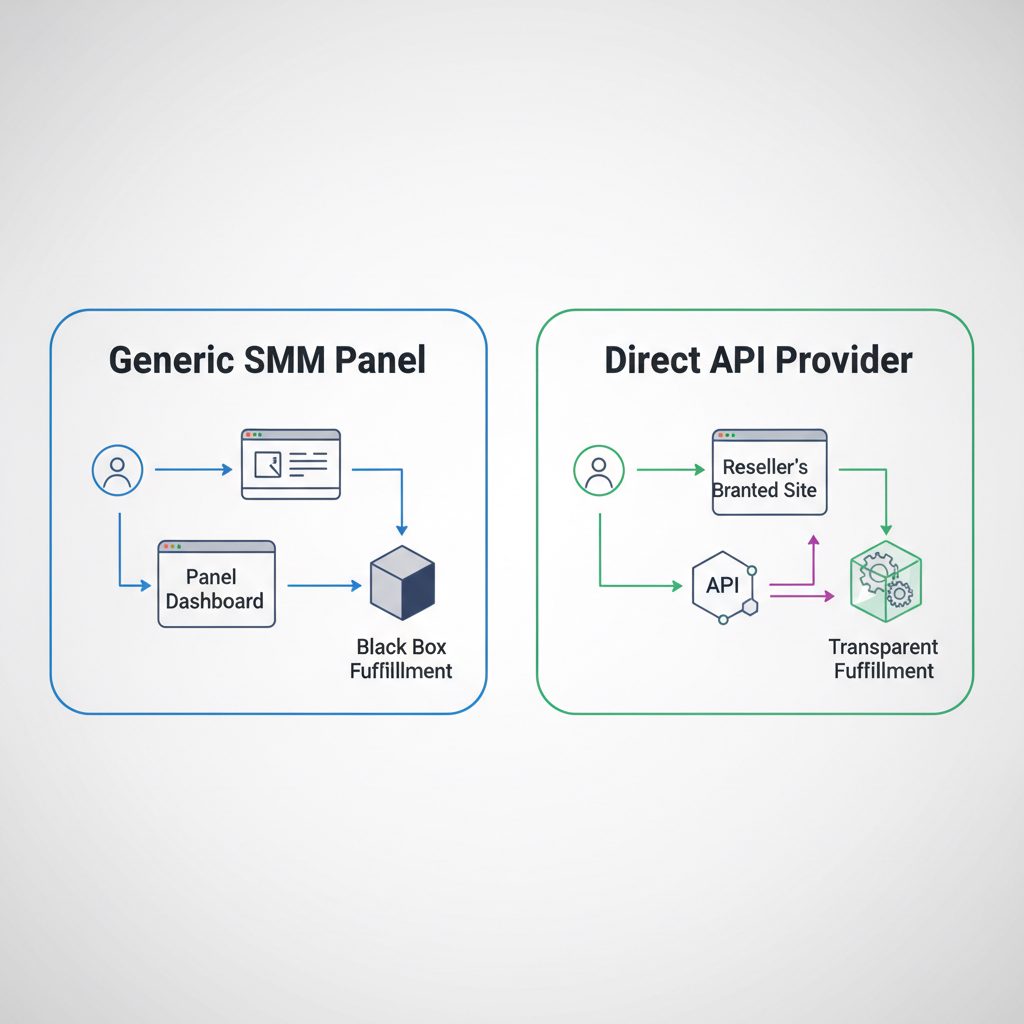
A generic SMM panel is a web dashboard selling engagement for dozens of social media platforms. They are the most common and cheapest option in a global social media management market valued at over $36 billion in 2026.
- Best For: Reselling basic social proof signals like post views or bulk channel members to clients who need to pass an initial credibility threshold.
- Pricing: Extremely low, often wholesale pay-per-1000 units, sometimes starting from $0.0001 per 1,000.
- Limitation: These panels are built for volume, not precision. They offer no specific tools for influencing search rankings. The members are typically low-quality, inactive accounts that provide no meaningful engagement beyond the initial number, and they often have high drop rates.
2. Telegram-Specific SMM Panels
These panels focus exclusively on Telegram, offering a wider array of services than generic providers. For example, they often provide options for reactions, poll votes, and sometimes even geo-targeted members. They represent a step up in specialization.
- Best For: Resellers who want a simple dashboard but need a service portfolio that looks more tailored to Telegram. They can be a good starting point before committing to a more technical solution.
- Pricing: Pay-per-1000, but typically higher than generic panels to reflect the more specialized services.
- Limitation: While more focused, the underlying methods are often still opaque. You are buying a result (e.g., 100 reactions), not control over the process. This makes it impossible to build a predictable and defensible Telegram search optimization service.
3. White-Label Reseller Platforms
A white-label platform provides the software and service fulfillment to run your own branded SMM panel. Your clients see your logo and domain, while the backend operations are handled by the platform provider.
A white-label Telegram reseller panel is designed for reselling bulk services to a client's own customers under the reseller's brand. [Source: GetItSMS]
- Best For: Entrepreneurs who want to launch a branded SMM business quickly without developing their own software. It offers a professional front for clients.
- Pricing: Usually a combination of a monthly platform fee plus wholesale rates on the services you resell.
- Limitation: You are entirely dependent on the platform provider for service quality, updates, and support. If their services fail or their methods get flagged by Telegram, your brand and business are at risk. You have no control over the service sourcing.
4. Direct API Providers
Direct API providers are the source for many other panels. Instead of a web dashboard, they offer an Application Programming Interface (API) that lets you programmatically order services and pull data. This is a business-to-business model for developers and other panel owners.
- Best For: Established panel owners, bot developers, and agencies who want to integrate Telegram ranking signals directly into their own systems. This model offers the highest degree of control short of building everything yourself.
- Pricing: Varies widely. Can be pay-per-call, monthly subscription tiers based on volume, or custom enterprise agreements.
- Limitation: A direct API is not a turnkey solution. It requires development resources to build a user interface, manage orders, and handle billing. It is not suitable for non-technical users.
5. Custom-Built Automation Bots
Building custom automation bots is the DIY approach: developing your own scripts to perform actions on Telegram. For instance, this could involve scraping search results, automating account interactions, or managing a private network of accounts to deliver signals.
- Best For: Technically skilled operators who require full control over their methods and want to create a unique service that competitors cannot easily replicate.
- Pricing: No direct service cost, but requires significant investment in development time, proxies, servers, and account maintenance.
- Limitation: This path has the highest workload and platform risk. It requires constant maintenance to adapt to Telegram's updates and anti-spam measures. A mistake can lead to your automation infrastructure being banned.
6. Channel Discovery & Analytics Tools
Channel discovery tools are not SMM panels but software platforms that provide data about Telegram. They function like SEO tools for Google, allowing you to track channel rankings, analyze competitor growth, and identify trending keywords. An example would be the various Telegram channel discovery platforms.
- Best For: Resellers who offer strategic consulting alongside fulfillment. The data from these tools can be used to prove the value of your ranking services to clients.
- Pricing: Typically a monthly or annual subscription (SaaS model).
- Limitation: These tools provide intelligence, not action. They show you what to do but do not provide the members, views, or other signals needed to actually do it. They are a necessary complement to, not a replacement for, a fulfillment panel or API.
7. Niche Signal Services (e.g., Keyword Joins)
Some providers specialize in delivering one very specific, high-impact signal for search ranking. A prime example is a Telegram keyword joins service, where accounts search a specific term and then join your channel. This action directly tells Telegram's algorithm that your channel is relevant for that keyword.
- Best For: Augmenting other services with a high-potency signal. A reseller can combine a base package of members with a targeted keyword join campaign to deliver measurable ranking improvements.
- Pricing: Per-join or package-based, and significantly more expensive than generic members due to the complexity of the delivery method.
- Limitation: A niche signal service is a scalpel, not a saw. It's only one piece of the puzzle. Relying on this signal alone without a foundation of channel activity and credibility is unlikely to produce sustainable results.
How does a direct API provider fit a reseller's workflow?
For resellers serious about offering a Telegram reseller panel for search ranking, a generic panel is insufficient. The goal is to access services that directly map to ranking factors. This is where a direct API provider becomes the logical choice.
Providers like TeleRanks offer a Reseller API designed for this purpose. Instead of a simple dashboard, it gives developers and panel owners programmatic access to ranking data and fulfillment services. This allows you to build your own unique, branded service on top of a reliable data source.
However, the direct API approach is not for everyone. It is for businesses that are, or want to become, a primary source themselves. It requires development work to integrate. If you are a channel owner looking for a simple one-off purchase, a specialized SMM panel is a better fit. But for building a scalable reseller business, direct API access provides the control and authenticity that white-label platforms cannot guarantee.
Why do most panels fail at delivering search rank?
Telegram's search algorithm is more sophisticated than a simple member count. While Telegram does not publish the exact formula, analysis from various sources shows it weighs a variety of signals. Understanding how Telegram global search works is key to understanding why most panels fail.
Ranking factors include:
- Keyword Relevance: The presence of target keywords in the channel's name, username (@handle), and description.
- Inbound Joins from Search: The rate at which users search for a term and then join your channel.
- Subscriber Count and Growth Velocity: A large and growing subscriber base acts as a general authority signal.
- Engagement Metrics: Post views, reactions, and shares indicate an active and valuable channel.
Most reseller panels only address subscriber count, and they do so with low-quality accounts that provide no further engagement. This fails to create the pattern of activity that the algorithm rewards. Furthermore, Telegram's Terms of Service explicitly prohibit using the service to "send spam or scam users," and artificially inflating stats can be seen as such. A true search ranking service must be able to generate a blend of these signals, which is why direct API access to specialized services is so important.
What to Do This Week
Choosing the right backend determines the viability of your reseller business. Base your decision on your technical resources and business goals. This week, take these three steps:
- Define Your Goal: Decide if you need a quick-to-market solution (White-Label Platform) or a foundation for long-term growth (Direct API).
- Evaluate a Provider: Request a trial or an API key from a direct provider to see the data and service quality firsthand. Compare its specific services against the ranking factors listed above.
- Review the Rules: Read Telegram's Terms of Service to understand the platform's rules on automation and third-party services. This ensures your business model is sustainable.
Frequently Asked Questions
What is the difference between a reseller panel and a main provider panel?
A main provider panel operates the infrastructure and sources the services directly. A reseller panel typically connects to a main provider's API to resell those services to its own customers. The main provider is the wholesaler, and the reseller is the retailer, often with their own branding.
Can using an SMM panel get my Telegram channel banned?
Using low-quality panels that deliver members via spammy or abusive methods can put a channel at risk. Telegram's terms of service prohibit artificial inflation of stats. The risk is lower with providers who use more sophisticated, gradual delivery methods. However, no third-party service is ever completely risk-free.
How do I measure the results of a Telegram search ranking service?
Track your channel's rank for target keywords over time using Telegram's native search function or a third-party tracking tool. You should also monitor organic subscriber growth originating from search. The goal is a measurable increase in visibility and inbound, keyword-driven joins.
Are more expensive Telegram members better?
Often, yes. Higher price usually corresponds to higher-quality accounts (e.g., with profile pictures, recent activity) and better retention (lower drop rates). For search ranking, the method of delivery (like keyword joins) is more important than the account quality itself, and these complex methods cost more to execute.
Why would I use an API instead of a web panel?
An API is for automation and integration. It allows you to build your own application, bot, or website that sells services without manual order entry. A web panel is for manual, one-off purchases. Resellers use APIs to automate their business and provide a smooth experience for their clients.